
Electric aviation is often linked with future passenger flights, but real-world operations are already happening in cargo. That recently became clear when a fully electric cargo aircraft touched down at Ostend-Bruges Airport for the first time, offering an early glimpse of how this new form of aviation is taking shape.
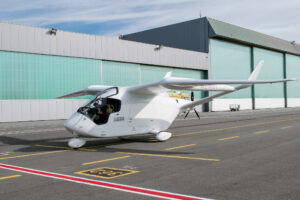
Before electric aircraft start carrying passengers between Europe’s regions, cargo is proving to be the natural starting point. It’s where reliability, speed and efficiency matter just as much as emissions. Think urgent medical supplies, transplant organs, high-value goods, or fast-moving e-commerce deliveries – routes where every minute counts.
The aircraft that made the journey, a BETA ALIA CTOL (CX300), is part of a wider series of test flights across the Benelux region. While still early-stage testing, it already offers a sense of what regional electric air transport could look like in practice.
Regional airports stepping into a new role
For airports like Ostend-Bruges, these kinds of flights are about more than just demonstrations; they’re about positioning themselves in a changing aviation landscape.
“Regional airports like Ostend-Bruges and Antwerp have the necessary space and operational flexibility required to thoroughly test and further scale up new technologies such as electric flying,” said Nathan De Valck, CEO of Ostend-Bruges and Antwerp Airport. “In this way, we can and want to play a pioneering role in making the aviation sector more sustainable.”
The aircraft used in the demonstration has a cargo capacity of 560kg, a range of 500–600km and a cruising speed of 283km/h. In practical terms, that puts a large part of north-west Europe within easy reach.
“That is where the opportunities lie for our airports,” De Valck notes. “Our airports are located in the economic heart of Western Europe; the Netherlands, France, Germany, the United Kingdom, and Luxembourg are all within easy reach.”
What comes next?
For now, cargo is leading the way; but it’s not where the story ends. As the technology develops, electric aircraft are expected to expand into passenger services and business aviation, opening up new possibilities for regional connectivity while cutting emissions.
“We expect the technology to be ready for a broader rollout within a few years, allowing regular passenger transport and business aviation to launch as well,” De Valck said.
It’s still early days, but demonstrations like this are doing something important: turning abstract ideas into something visible, testable, and increasingly real.
Cargo may be the first step, but it’s laying the groundwork for something much bigger: a quieter, cleaner, and more connected network of European regional flights, with airports like Ostend-Bruges helping to bring it to life.